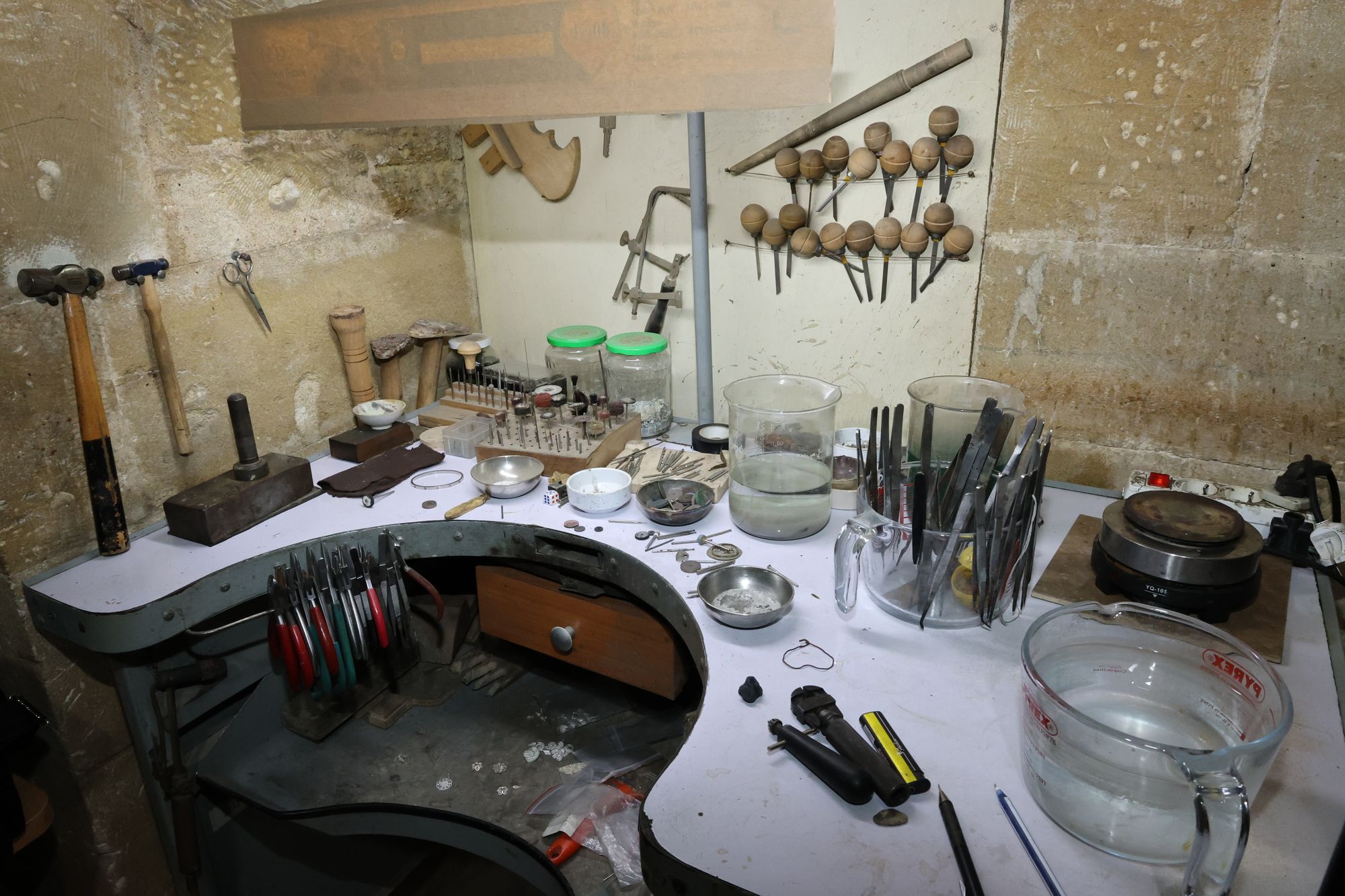
The atelier · process in view
The final millimeterbelongs to the hand
Tools establish precision. The eye and hand resolve the relationship between material, edge, stone, movement, and skin.
Follow the makingCraft is not a nostalgic performance. It is the discipline of noticing what a machine cannot decide.
Atelier principle · temporary brand copy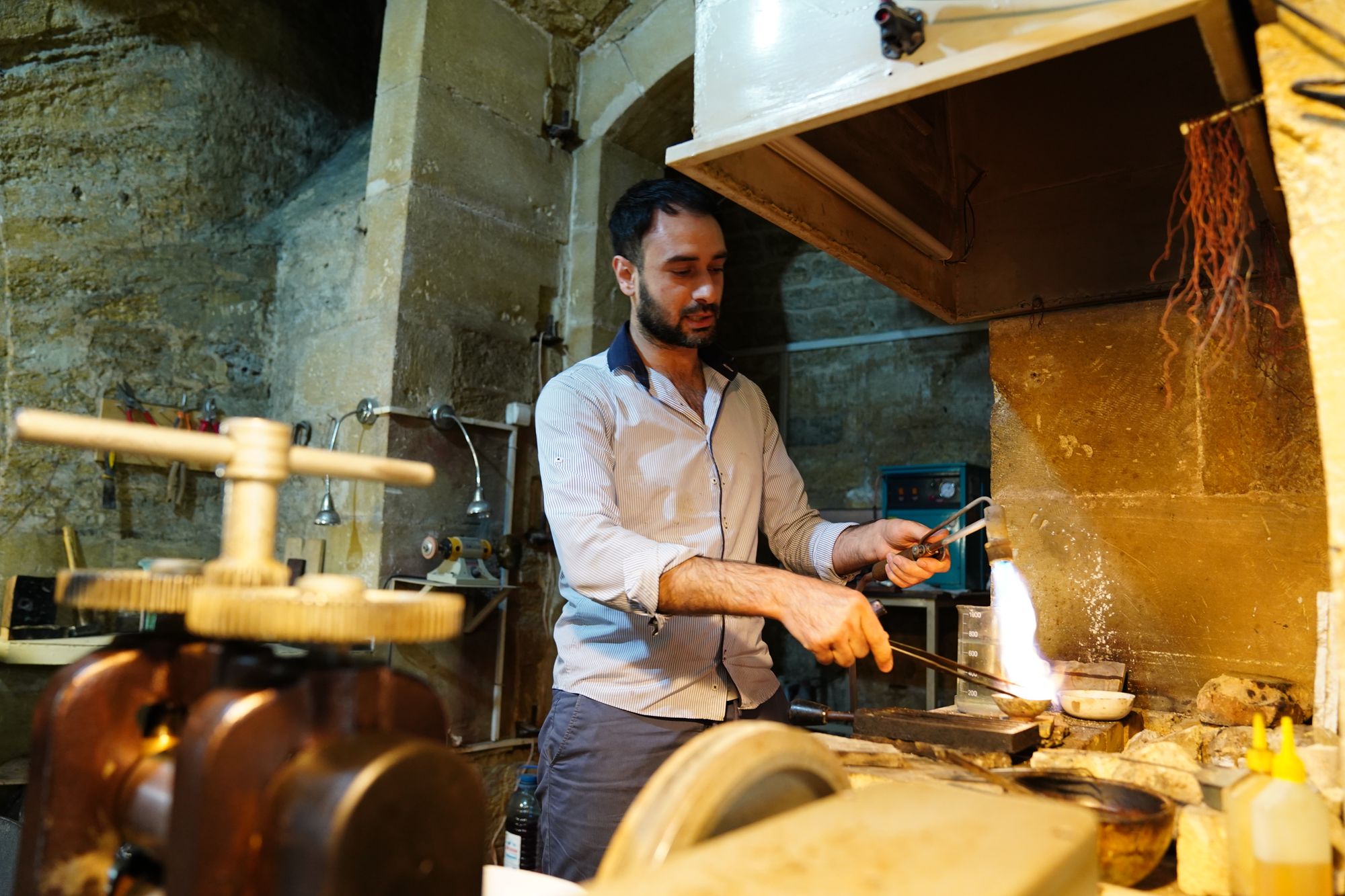
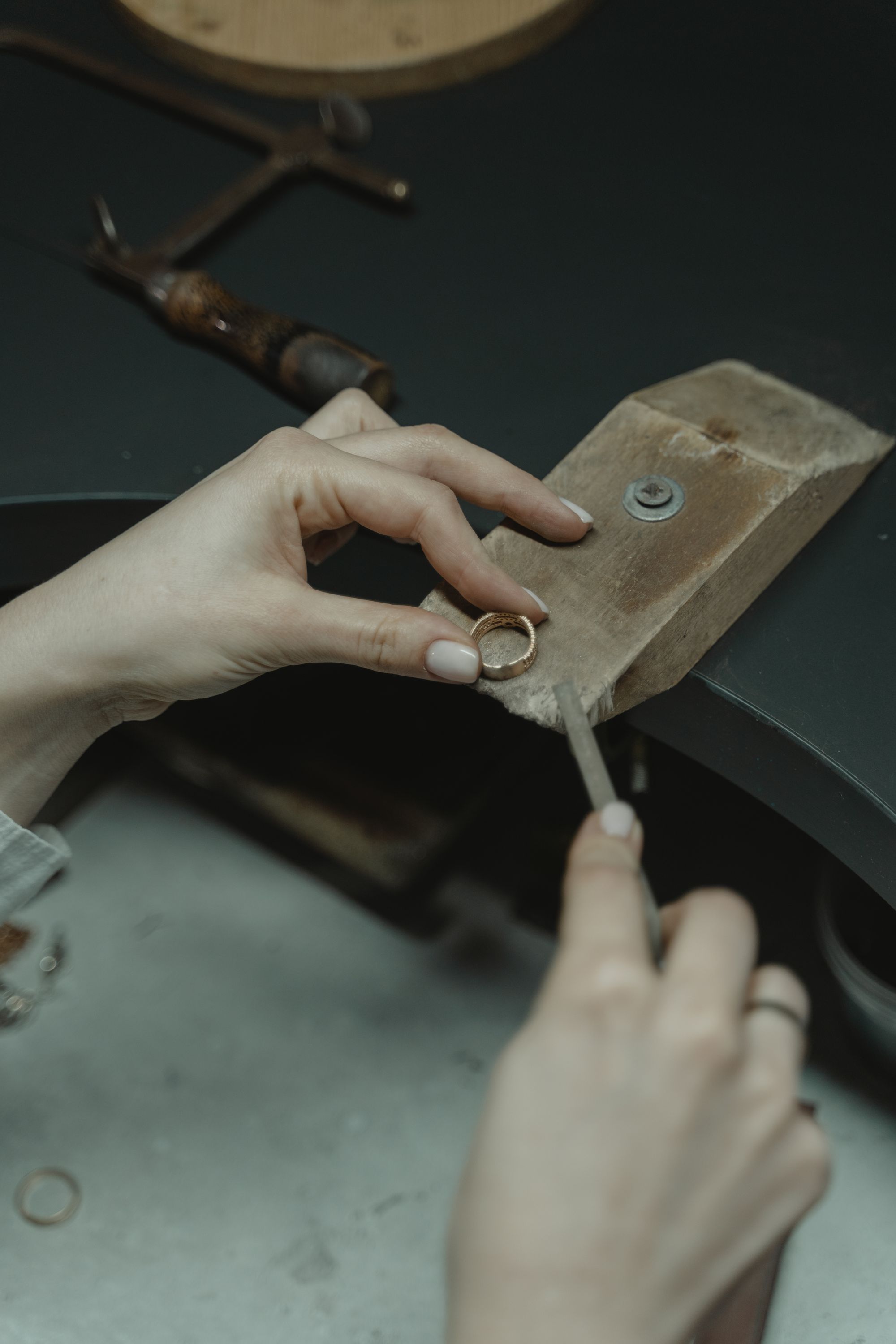

Technique chapters
A sequence of small decisions
The finished object is the accumulation of choices too quiet to announce themselves once the jewel is worn.
Form without forcing
Metal is moved in stages so the structure remains controlled and the surface retains intentional character.
Set around light
Openings, contact points, and protective edges are balanced against how the approved stone performs.
Finish for the hand
Polish and satin are transitions, not decoration. Their boundaries are reviewed by sight and touch.

Tools · extended senses
Precision without losing touch
Files, gravers, flame, magnification, gauges, and digital studies each answer a different question. None replaces judgment at the bench.
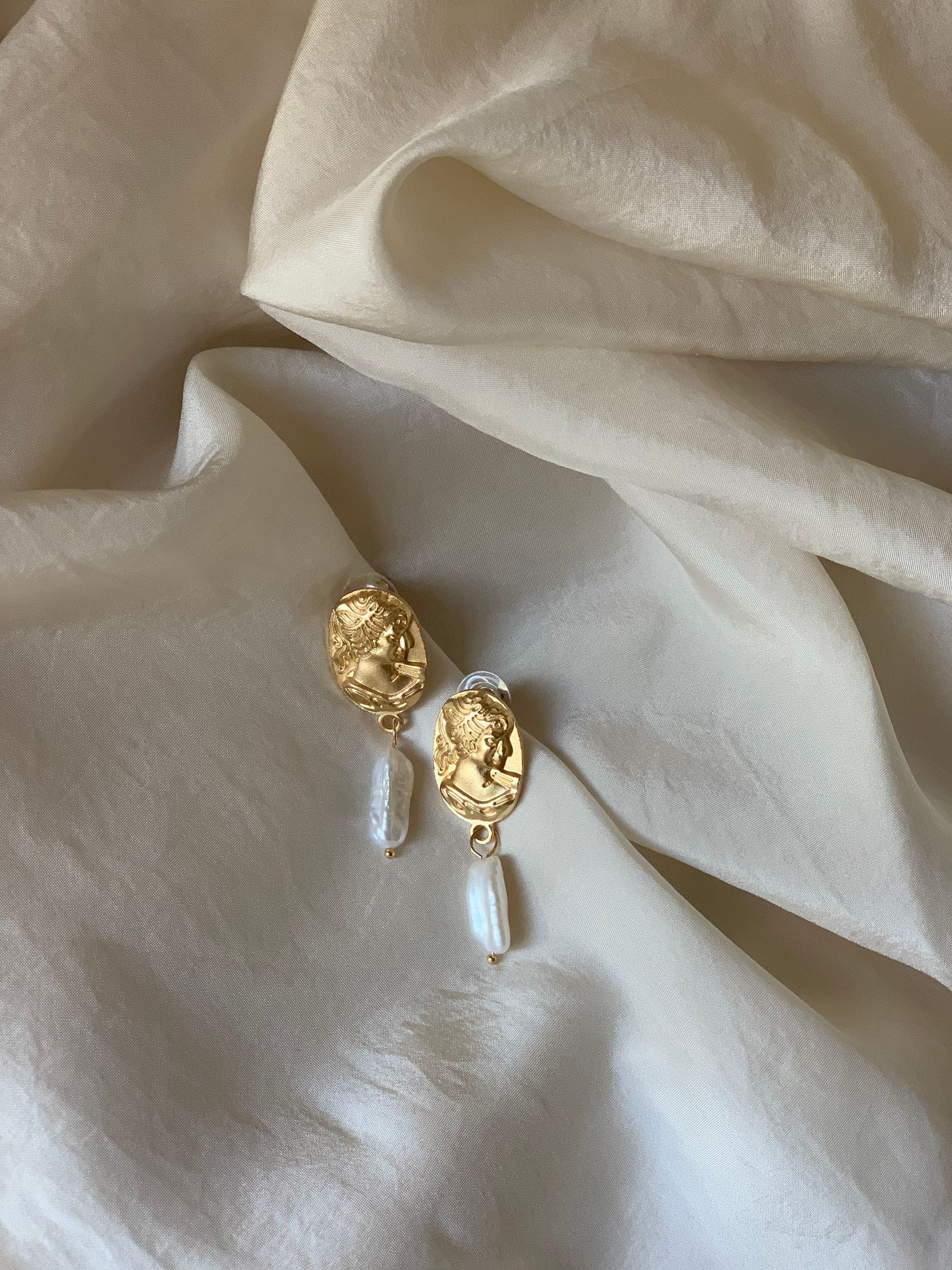
Material reading
Every material sets its own pace
Gold, platinum, stones, and pearls behave differently under pressure, heat, setting, wear, and future service. The making plan follows the approved material rather than a generic sequence.
- Metal
- Hardness, work history, joining, finish
- Stone
- Structure, cut, inclusions, heat sensitivity
- Body
- Scale, contact, movement, closure
- Future
- Cleaning, repair access, refinishing, resize potential
From brief to object
Four checkpoints, one continuous line
Each checkpoint has a purpose: clarify intent, reduce ambiguity, protect the material, and preserve the quality of the final object.
Proportion
Profile, dimension, negative space, and contact with the body are reviewed before forming.
Construction
Joining, support, setting access, closure, and future service are planned as one system.
Surface
The transition between polished, satin, textured, and hidden areas is resolved deliberately.
Inspection
Final approved specifications, stone security, movement, finish, and comfort are checked before release.
Service instrument
Quality is a chain, not a final glance
A considered service system designed to continue long after a piece leaves the atelier.
Specification review
The finished object is checked against its approved working record.
Stone security
Settings are inspected for the needs of the specific approved stone and design.
Closure & movement
Clasps, joints, articulation, and contact points are tested through intended movement.
Surface continuity
Edges, joins, polish, satin, and hidden transitions are read under varied light.
Wear comfort
Scale and touch points are considered on the body, not only on the bench.
Document match
Only verified, product-specific material and sourcing records should accompany the piece.

Sourcing without slogans
Proof before promises
Responsible practice must be supported by supplier records, product-specific documents, and claims a client can substantiate. Until those exist, this site uses cautious working language rather than invented certainty.
Heirloom care
Repair begins with an examination
Cleaning, repair, resizing, and refinishing depend on construction, stone condition, prior work, and material. The atelier assesses first, then proposes a specific path.
Atelier field notes
The thinking behind the making
Material observations and process studies from the concept journal.

Atelier conversation
Bring an object. Bring a question.
Request a private appointment for craft, care, fit, or a future commission.
Visit the atelier